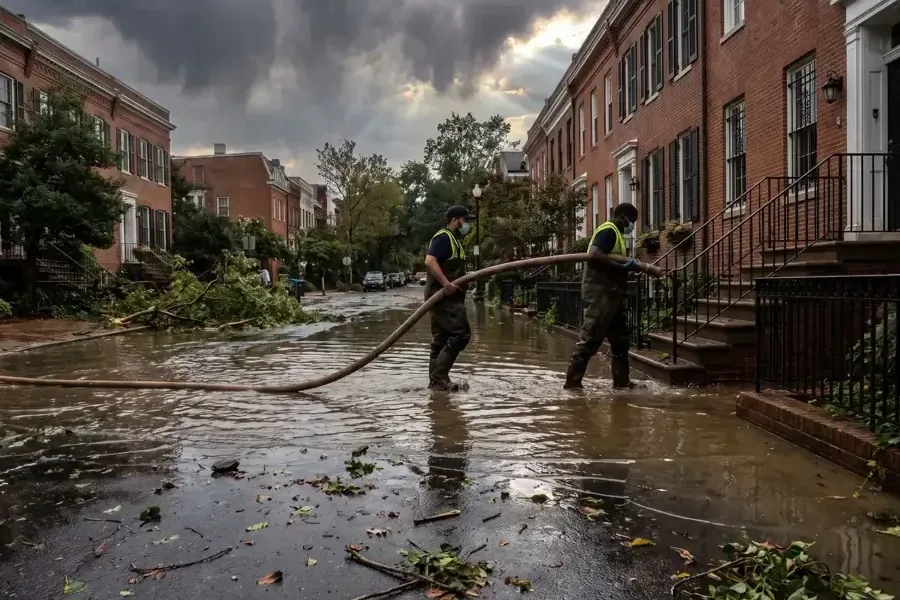
Overflow from the undersized West Fontana Channel has damaged nearby properties and infrastructure. The same first steps apply to any house when heavy rain pushes runoff toward the door.
Key takeaways
- Runoff that reaches a house is handled as Category 3 water, because it carries soil, debris and whatever the street picked up on the way.
- The City of Fontana says floods are common with heavy rainfall and offers sandbags and sand at designated locations.
- Work on a concrete lining for the channel broke ground in February 2019, and this post does not claim the rebuild is finished.
- Carpet, pad and low drywall that touched runoff are usually removed, not dried in place.
- Photos, moisture readings and a list of lost items give the later cleanup and any claim a clear record.
A channel with a long overflow record
The West Fontana Channel is a flood channel created in the 1970s, after the County of San Bernardino got serious about flood control following the 1969 flooding. As of March 2019 it was a dirt ditch with rocks placed to slow erosion, and unlike Day Creek and San Sevaine it had never been lined with concrete.
Overflow from the undersized channel has damaged nearby properties and infrastructure. Erosion once undermined railroad tracks in the city, and Metrolink temporarily halted service.
For a homeowner, the history matters in a practical way. A channel that has overflowed before is a reason to treat each heavy rain as a possible water event, even when a house has stayed dry in the past.
Rebuild work and the storm drain at Orange Way
Work to rebuild the channel with a concrete lining broke ground in February 2019. The finished channel is designed to carry 41,000 gallons per second.
The City of Fontana offered to transfer $10 million from a State grant to the project, and it added $2 million for a storm drain that connects to the channel. That drain is meant to relieve flooding at Orange Way and Cypress Avenue.
A storm drain that connects to the channel can ease street flooding, but how one lot behaves still depends on grading, gutters and the path water takes across the yard. A drain at a street corner is not a substitute for watching the low side of the house.
Only the groundbreaking is confirmed here, so nearby owners are better off preparing for runoff than assuming it can no longer happen.
What runoff does once it reaches a house
Water that has run down streets and across lots carries soil, oil, trash and bacteria. It is classed as Category 3, so the cleanup rules are stricter than for a pipe leak.
Contact time matters. The longer runoff sits in carpet, pad and drywall, the deeper it soaks and the more bacteria it carries into the structure, which is why removal decisions are made quickly.
The decision on each material comes from moisture readings and from how long the water stood.
- Carpet and pad that touched runoff are usually removed, because they cannot be made clean
- Drywall wicks the water upward, so the bottom section is often cut out
- Insulation in wet wall bottoms holds water and is replaced
- Tile and sealed concrete are cleaned and treated, then dried
- Cabinet toe kicks and door bottoms that swelled are checked and often replaced
Before the storm: sandbags, power and valuables
The City of Fontana says floods are common with heavy rainfall, and it offers sandbags and sand at designated locations. During storms it also points residents to the Southern California Edison outage map to track power outages.
Sand is useful too. A modest berm of sand and bags across a driveway cut or a doorway can turn a trickle away from a garage.
None of this promises a dry house, but it can shrink the wet area and the work that follows.
- Stack sandbags at the garage door and along the low side of the house
- Lift boxes, electronics and papers off the floor
- Move cars to higher ground before the water rises
- Charge phones and keep a flashlight handy in case the power fails
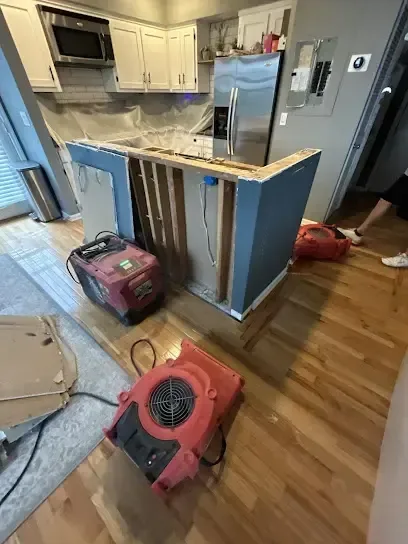
After water gets in
The first minutes are about safety and a clean record, in that order.
Safety first
Stay out of standing water that may touch outlets, cords or appliances. If power cannot be cut from a dry spot, leave it to an electrician or the utility.
Floodwater can also hide nails, glass and sharp debris, so sturdy shoes matter even for a quick look.
- Keep children and pets out of the wet rooms
- Wear boots and gloves for any contact with the water
- Do not run a household vacuum on wet floors
Extraction and first photos
Photograph the high-water mark on walls and furniture before anything is moved. Then storm runoff and flood cleanup begins with pulling the water out.
Water extraction with truck-mounted and portable units lifts water from carpet, pad and floor seams much faster than towels or a shop vacuum.
How the cleanup is staged
Rooms with the deepest or longest contact are handled first. Wet pad and low drywall come out, surfaces are cleaned and treated, and drying equipment goes in once the contaminated material is gone.
Final readings are taken before anything is closed up, so no wet framing is hidden behind new drywall. For a wider look at local service, see water damage restoration in Fontana.
- Extraction of standing water and soaked fibers
- Removal of materials that cannot be cleaned
- Cleaning and treatment of hard surfaces and framing
- Drying with air movement and dehumidifiers, checked by readings
- Final moisture check before any rebuild
Records that help a claim
Runoff losses are easier to explain when the paperwork is ready. A few habits make the difference.
Readings, photos and a list of what was removed are kept together, so the insurer sees the same story the crew saw.
- Photos of the outside water and the street conditions, taken from a safe spot
- Photos of every room, including the high-water mark on walls and furniture
- A list of removed items, with rough age and value
- Notes on when the water arrived and when it was pumped or extracted
Questions
Is runoff from a flood channel dirty water?
Yes. Water that has traveled over streets and soil is handled as Category 3, which means protective gear and removal of porous materials that cannot be cleaned. The water has usually crossed streets, soil and drains, so it carries more than clean rain.
Does the channel rebuild mean flooding is over?
Only the February 2019 groundbreaking is confirmed here, along with a design capacity of 41,000 gallons per second. A post cannot say whether a particular street will stay dry.
Where are sandbags available?
The City of Fontana says it offers sandbags and sand at designated locations. The city is the place to confirm current sites.
Should wet carpet be saved after runoff?
Usually not. Carpet and pad that touched contaminated water are removed, while hard surfaces are cleaned and dried. Rugs and solid furniture are judged one at a time, since some can be cleaned and dried.
What if the power goes out during a storm?
The city points residents to the Southern California Edison outage map. Keep away from wet electrical items and call an electrician if anything below the waterline is live.
How long does a flood cleanup take?
It depends on how far the water spread and what it touched. Extraction and removal come first, then drying runs until readings reach the target, and the crew can give a range once the wet area has been mapped.