About Claremont Water Damage Restoration
24/7 water damage restoration for a foothill college town on the eastern edge of Los Angeles County, from the first extraction to the final moisture reading.
Find us on GoogleRestoration shaped by how water behaves in a foothill college town
Claremont was mapped out in the railroad land boom, grew up around Pomona College after it moved here in 1890, and was incorporated in 1907. The town grid still carries the 1902 plan: numbered streets running east to west, avenues named after colleges running north to south.
That mix of older houses near the Village, ranch homes and newer tracts, and the slope down from the San Gabriel foothills decides where water comes from. The restoration team extracts the standing water, maps what is still wet under the floors and behind the walls, and dries the structure to the IICRC S500 standard. Equipment stays until the readings say dry.
Every loss is documented with a moisture map, daily readings and timestamped photos, so the claim file is ready when the adjuster asks for it.
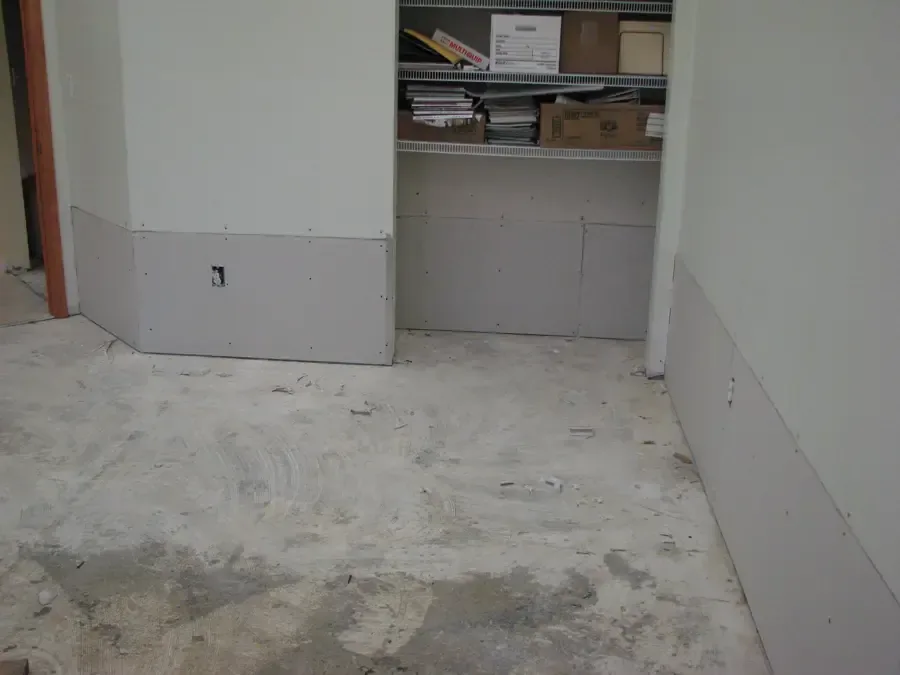
How every dry-out is held to a standard
Moisture mapping
Wet materials are mapped with meters and thermal imaging before any equipment goes down.
Extraction
Truck-mounted extraction removes standing water first, so the dehumidifiers have less to pull from the air.
Drying
Air movers and LGR dehumidifiers are sized to each room and each material class.
Verification
Readings are logged daily until wet materials sit within 2 to 4 points of a dry reference.
- IICRC S500 drying standard
- Category 1, 2 and 3 protocols
- Class 1 through 4 equipment sizing
- EPA-registered antimicrobial
Water damage in the house right now?
The restoration team runs 24/7 dispatch across the Village, the Colleges area, the foothill streets and the neighboring Pomona Valley cities.