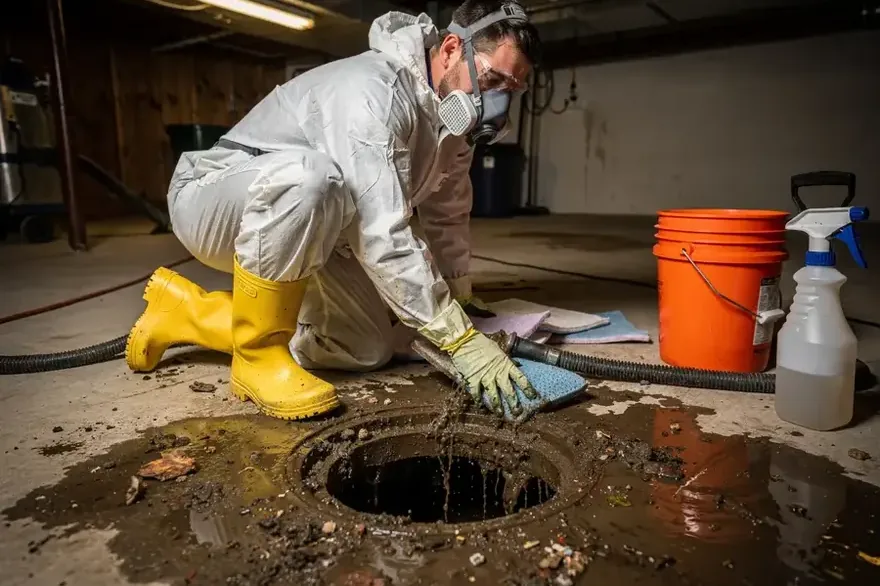
When a toilet, tub or floor drain backs up, the first question is where the stoppage sits. Jurupa Community Services District, known as JCSD, asks residents with sewer problems to contact the district first, and it checks the main sewer and any ground-level cleanout.
Key takeaways
- JCSD asks residents with sewer problems to contact the district first, before hiring a contractor.
- The district checks the main sewer and any ground-level cleanout to learn whether the stoppage is in the lateral or in the indoor plumbing.
- The property owner is responsible for keeping the lateral clear between the building and the main sewer, and for locating it.
- JCSD does not charge extra to inspect the sewer, but it does not pay for a contractor's call.
- Sewage that has come back into a home is Category 3 water and calls for removal of porous materials, cleaning and drying.
Why the cleanout comes first
A sewer lateral is the pipe that runs from the building to the main sewer. A ground-level cleanout is a capped opening on that pipe, usually outside, that gives access for checking and clearing it.
JCSD says it checks the main sewer and any ground-level cleanout to see whether the stoppage is in the lateral or in the indoor plumbing. That answer tells the household which side of the property the problem sits on.
The district also says its Sewer Operations team responds to emergency service requests 24 hours a day. It uses a Vactor truck to clean sewer mains and a closed-circuit television inspection vehicle to inspect pipes.
Pipes shared by neighbors, a stoppage in the main and a stoppage in the lateral can all look the same from the bathroom floor. The cleanout check is how that guess becomes an answer.
Who is responsible for which pipe
JCSD states that the property owner is responsible for keeping the lateral clear between the building and the main sewer, and for locating the lateral.
The district does not charge extra to inspect the sewer, but it does not pay for a contractor's call. That is the practical reason to contact it first.
Rubidoux Community Services District is a separate district that lists sewer disposal among its services, so an owner confirms which district serves the address before calling.
An owner who is unsure where the lateral runs can ask the district about locating it, since locating the lateral is the owner's job under JCSD's description.
Roots, pipe choice and other causes of a stoppage
JCSD says tree roots find water inside sewer pipes, and it advises against planting trees near them. It also suggests tightly sealed pipe, such as ABS plastic with glued joints, when a pipe is replaced.
Roots are only one cause. Grease, wipes and a sagging pipe section can also stop a lateral, and a backup tends to show at the lowest fixture in the house first.
A backup that comes back every few months points to a standing cause, such as roots or a damaged pipe section, not a one-time clog. Fixing the cause is a plumbing job, while the cleanup of what already came into the house is a restoration job.
- A tub or shower that gurgles when the washer drains
- Several drains slowing at once, not just one
- A toilet that bubbles or rises when another fixture runs
- Sewer odor near a floor drain or the cleanout cap
What backed-up sewage means for the house
Sewage is not just wet. It carries bacteria and other contaminants, so it is classed as Category 3 and handled with protective gear and a different set of rules.
Odor alone is not a measure of how much cleanup is needed. Sewage can soak flooring seams and wall bottoms well beyond the visible puddle, so readings and careful inspection set the scope.
What is removed
Porous materials that soaked up sewage cannot be made safe again, so they are bagged and taken out.
- Carpet and pad in the affected rooms
- The bottom of drywall and any baseboards the water touched
- Wet insulation inside wall bottoms
- Soaked cardboard, fabric and particleboard furniture
What is cleaned and kept
Tile, sealed concrete and solid framing are cleaned, treated and dried. Readings decide when the work is done.
What to do while waiting for the district
The hours before anyone arrives can add to the damage or limit it. A few steps keep the loss smaller.
Reaching the right party early also keeps the story clear. The district, the plumber and the cleanup crew each handle a different piece.
- Stop using toilets, sinks, showers and the washing machine
- Close doors to the affected rooms and keep foot traffic out
- Lift belongings, rugs and shoes off wet floors
- Skip chemical drain cleaners, which can splash and rarely clear a deep stoppage
- Photograph the water and note which fixtures were affected
The cleanup and drying sequence
Stop water use in the house first, since every flush or load of laundry sends more to the backup. Sewage backup cleanup then follows a set order.
After the cleanup, check the cleanout area again for odor or damp ground. A seeping pipe in a yard is a separate repair, but it affects how safe the surrounding ground is for children and pets.
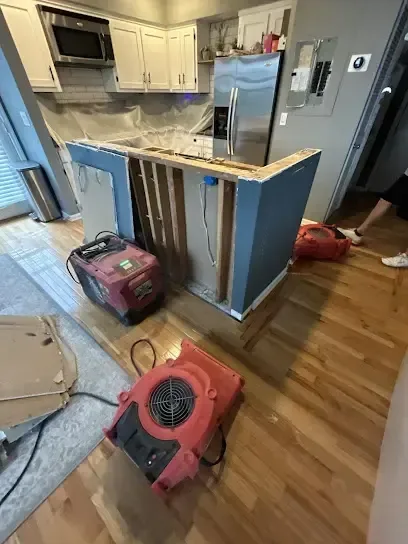
Standing liquid comes out through water extraction, and drying starts only after contaminated material has been removed and surfaces cleaned.
- Contain the area so foot traffic does not carry sewage into clean rooms
- Extract standing liquid
- Remove porous materials that cannot be cleaned
- Clean and treat hard surfaces and framing
- Dry with air movement and dehumidifiers, then confirm with readings
Manholes, cleanouts and safety
JCSD warns residents never to open a sewer manhole. A yard cleanout cap should also stay closed until someone who knows what is behind it is ready, because backed-up sewage can rush out.
Keep children and pets away from the area, and wash hands after handling anything that touched the water. For wider local service, see water damage restoration in Jurupa Valley.
Questions
Who should be called first for a sewer backup?
JCSD asks residents with sewer problems to contact the district first. Its crew checks the main sewer and any ground-level cleanout to see whether the stoppage is in the lateral or in the indoor plumbing. Calling first also puts the question of which side of the property the stoppage sits on in front of the people who can check it.
Who is responsible for the sewer lateral?
JCSD says the property owner is responsible for keeping the lateral clear between the building and the main sewer, and for locating it. Hiring a plumber to clear or replace the lateral is the owner's step once the location of the stoppage is known.
Does JCSD charge to inspect the sewer?
JCSD says it does not charge extra to inspect the sewer, but it does not pay for a contractor's call.
Is sewage backup water dangerous?
Yes. It is Category 3 water, which carries bacteria, so the area is closed off and cleanup is done in protective gear. Even a small amount that touched flooring or drywall needs more than a mop and bleach.
Can tree roots cause a backup?
Yes. JCSD says roots find water inside sewer pipes and advises against planting trees near sewer pipes.
What if the backup happens at night?
JCSD says its Sewer Operations team responds to emergency service requests 24 hours a day. In the meantime, stop using water, keep people out of the area and photograph what is happening.