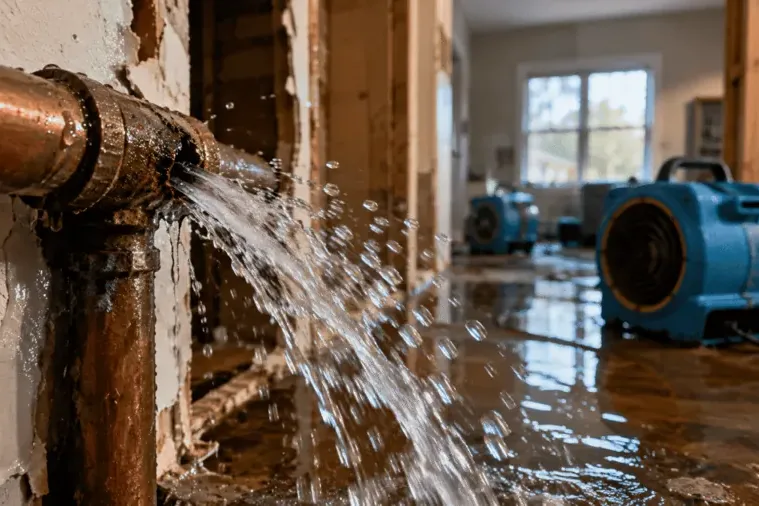
Golden State Water supplies Claremont's drinking water from local groundwater, and it proposes replacing critical pressure-reducing valves in its 2028 to 2030 rate case. Whatever the utility does, the pressure inside a home puts steady strain on every pipe and fitting, and a small leak can hide for a long time.
Key takeaways
- Golden State Water supplies Claremont from local groundwater, and valve replacements are only proposed in its 2028 to 2030 rate case.
- Pressure that is too high or that swings puts strain on supply pipes, fittings and hoses.
- Warning signs of a hidden leak include a higher bill, a warm floor spot, damp flooring and the sound of running water.
- A slab leak is found by tracing, then dried by lifting flooring and drying the slab and wall bottoms.
- A pressure risk check can point out homes where strain is more likely.
What pressure does to a supply pipe
Water pressure is the push behind every faucet. When it runs high, or when it jumps as valves open and close, fittings and flexible hoses take the load.
Most leaks begin small, at a joint or a hose end. A tiny weep can run for weeks under a floor or inside a wall before anything shows on the surface.
Pressure also changes through the day. A thud when a valve closes quickly, often called water hammer, is a sign that surges are moving through the pipes.
What Golden State Water has proposed
Golden State Water lists proposed work for 2028 to 2030 that includes replacing two groundwater wells past their useful service lives and upgrading the 1.5-million-gallon Del Monte and Pomello reservoirs. Replacing critical pressure-reducing valves is proposed in its 2028 to 2030 rate case, and pipeline replacements would continue.
None of that work is a statement about any one home. It is a reminder that the water system is maintained over years, and that pressure at a house can differ from what the utility delivers.
A pressure gauge screwed onto an outdoor hose bib shows the home's pressure at that moment. A plumber can read it over time and fit a regulator if the numbers call for one.
Signs of a hidden leak
A hidden supply leak rarely announces itself. It leaves small clues that add up.
Not every clue is a leak. Irrigation, guests and a running toilet can raise a bill too, which is why the meter test matters.
- A water bill that rises with no change in use
- A water meter that moves when every fixture is off
- A warm spot on the floor, or flooring that feels damp
- The sound of running water when nothing is on
- Baseboards, grout or paint that crack, lift or stain without a clear cause
Slab leaks: finding and drying
A slab leak is a pressurized supply pipe leaking under a concrete floor. The water finds the path of least resistance, so it often shows up at a wall base or a door threshold far from the pipe.
How the leak is found
Pressure tests, listening equipment and moisture mapping point to the area. The goal is to open as little flooring as possible.
A leak that sounds like a hiss or a trickle under a floor is often easier to hear at night, when the house is quiet and other noise is low.
How the area is dried
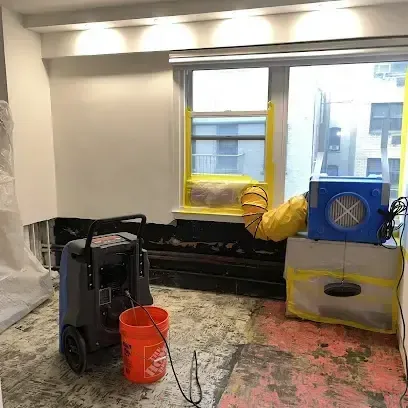
Once the leak is located and stopped, flooring over the wet zone is lifted. Slab leak water damage work then dries the slab, the wall bottoms and the subfloor, with readings at each visit.
Concrete holds water and releases it slowly, so slab drying can take longer than the surface suggests. Readings, not touch, decide when it is done.
- Wet carpet and pad are removed
- Baseboards and the bottom of drywall are checked and opened where needed
- Dehumidifiers and air movers run until slab readings return to normal
Burst or failed pipes inside walls and ceilings
A pipe that splits inside a wall or ceiling is a faster problem. Water pours into the cavity and soaks insulation and drywall within minutes.
The steps are the same in any home: shut off the main valve, extract the water, open what is wet and dry the rest. Burst pipe and supply pipe leak cleanup follows that order.
Standing water on a floor comes out through water extraction and removal before drying begins.
Ceilings below a failed pipe may sag or stain, and wet insulation can hold water for a long time. It is pulled out because it will not dry well in place.
Using the pressure risk check
A short water pressure leak risk check asks a few questions about a home and its plumbing. It points out whether strain on the pipes is more likely and what to look at next.
It is not a substitute for a plumber or a moisture survey. It is a quick way to decide whether a closer look is worth it.
The best use of the result is as a prompt. A high score means a pressure test and a closer look at hoses, fittings and the main valve.
First steps when a leak is suspected
Act on the clue, even when it seems small.
A written timeline helps later. It shows when the clue appeared, what was done and when the leak was stopped.
- Turn off every fixture and check whether the water meter still moves
- Photograph any damp area, stain or lifted flooring, with the time
- Shut the main valve if water is flowing and cannot be stopped
- Move furniture and belongings away from the wet area
- Call a plumber to find the leak and a drying team to read the moisture
Questions
Is Golden State Water replacing pressure-reducing valves now?
No. Replacing critical pressure-reducing valves is only proposed in its 2028 to 2030 rate case, so nothing here says the work is scheduled or complete.
Can high water pressure burst a pipe?
It can strain fittings and hoses and shorten their life, which makes a failure more likely over time. A plumber can read the pressure and fit a regulator if needed. Flexible hoses on washers and toilets are common weak points.
How can a slab leak be found without tearing out the floor?
Listening equipment, pressure tests and moisture mapping narrow the search so only a small area needs to be opened. Opening a small, well-placed area is far less work than breaking a large section of floor.
What happens if a slab leak is left alone?
Water keeps feeding the slab, wall bottoms and flooring. The bill rises, and floors and drywall absorb more water over time.
Does a higher water bill always mean a leak?
No. Irrigation, guests or a running toilet can raise a bill too. A meter that moves with every fixture off points to a leak.
Should the main valve be shut off for every suspected leak?
Only when water is flowing and cannot be stopped. For a slow, hidden leak, turning off the fixtures and checking the meter is the first test.